Source Top Grade Used Women Clothing for Resale, Thrift, and Fashion
Compare 30 listings for Top Grade Used Women Clothing sourced from China. Buyers can evaluate mixed styles, seasonal options, and packaging details for wholesale needs in Africa, South America, and the Middle East.
Key considerations
Products List

Use Clothing for Ladies Bales Women Bundle of Used Second Hand Clothes
$700.00 - $1500.00
MOQ: 10 Tons

Used Clothes Bales for Ladies Women Bundle of Used Second Hand Clothes
$500.00 - $1200.00
MOQ: 10 Tons


Hot Factory Direct Baby Used Clothes for Sale Second Hand Women's Clothing
$700.00 - $1500.00
MOQ: 10 Tons


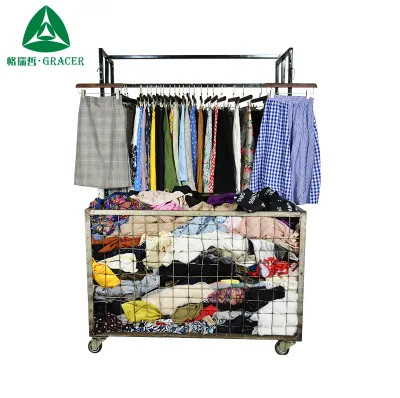


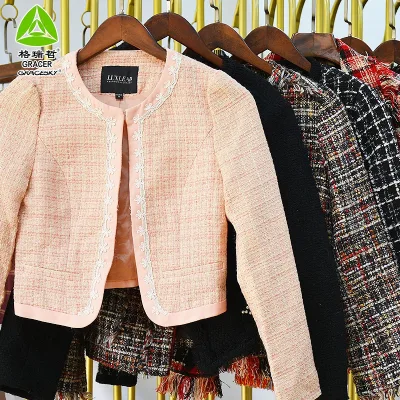
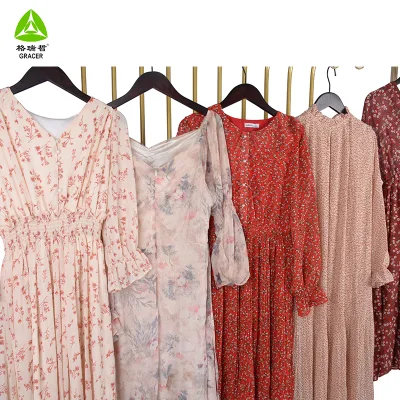
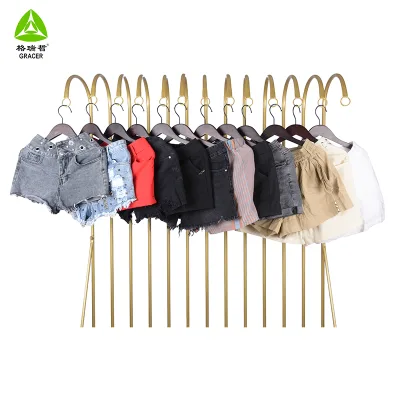
Comprehensive Sourcing Guide
Strategic Sourcing Framework for Top Grade Used Women's Clothing
The global market for second-hand apparel presents a complex procurement landscape where "top grade" designations require rigorous verification rather than reliance on marketing terminology. Buyers targeting top grade used women's clothing must navigate a supply chain defined by specific origin points, packaging standards, and quality classifications that differ significantly from new garment sourcing. This guide provides an evidence-based framework for evaluating suppliers, understanding product specifications, and mitigating risks associated with the trade of used apparel. The focus remains on factual attributes observed in the current market, ensuring that procurement decisions are grounded in verifiable data rather than speculative claims.
Understanding Product Classification and Quality Standards
In the used clothing sector, the term "top grade" is not a universal certification but a market-specific classification that varies by supplier and region. Based on available product data, the industry frequently utilizes descriptors such as "Top Grade a Used Clothes" or "Top A Grade Second Hand Clothes" to denote high-quality inventory. These classifications generally imply garments that are in excellent condition, often described as "Clean" with a condition rating of approximately 90%. However, buyers must recognize that these terms are observational attributes rather than standardized certifications.
The product model for this category is consistently identified as "Second Hand Clothes," "Used Clothing," or "Second Hand Vintage Clothes Bales." The inventory often includes a mix of styles ranging from Europe and America to Korean, English, and Hip-Hop fashion. When evaluating a supplier, the primary distinction lies in the condition and sorting methodology. The observed data indicates that high-grade items are typically sorted by season, with specific categories for "Used Summer Wear" and "Used Winter Clothes," as well as mixed options. Buyers should verify if the supplier's "Top Grade" designation aligns with a specific sorting protocol, such as the separation of children's wear from adult wear, as the market data shows distinct product lines for "Adults" and "Children."
Technical Specifications and Packaging Protocols
The physical specifications of used clothing bales are critical for logistics planning and cost estimation. The standard packaging for top grade used women's clothing varies significantly in weight, which directly impacts shipping efficiency and customs declaration. Observed specifications indicate a wide range of bale weights, typically falling between 38kg and 100kg per sack. Some suppliers offer more granular packaging options, such as transparent bags weighing 20kg to 100kg, or specific bale weights of 45kg, 65kg, 75kg, 80kg, 90kg, and 100kg.
The packaging material is another technical consideration. The market data highlights the use of "Used Clothes Transparent Bags" for certain grades, which allows for visual inspection of the contents without opening the package. This is a significant advantage for quality control prior to final acceptance. In contrast, other specifications list standard bales weighing 38kg to 100kg without specifying transparency. Buyers must clarify the exact packaging standard with the supplier, as the weight range can affect the number of units per container. For instance, a 20-foot container can accommodate a specific number of bales depending on whether the weight is 38kg or 100kg per unit.
Furthermore, the product origin is a key technical specification. The data consistently points to China as the primary source, specifically noting "China First-Tier Cities" and "Guangzhou China" as collection points. The "Original Country" is listed as "All Collecting From First-Tier City in China," suggesting a centralized logistics hub. This geographic concentration influences the style mix, which often includes European, American, and Korean fashion trends. Buyers should verify the specific city of origin, as collection from different tier-1 cities may result in variations in the vintage or brand composition of the bales.
Cost Drivers and Pricing Structures
The pricing of top grade used women's clothing is influenced by several dynamic factors, including the condition of the garments, the seasonality of the inventory, and the volume of the order. The observed price range in the market spans from $0.50 to $1,500, reflecting the vast difference between single-unit pricing and bulk container rates. The "Competitive Price" and "Competitive Used Summer Wear" descriptors suggest that pricing is highly sensitive to market demand and seasonal availability.
A primary cost driver is the Minimum Order Quantity (MOQ). The data indicates that the standard MOQ for top grade used clothing is often set at "1*20FT/40FT Container." This high entry threshold means that buyers must commit to significant volume, which impacts the unit cost. The "Mini Order Quantity" is explicitly defined as a full container load, which suggests that smaller quantities may not be available at the standard "top grade" price point. Additionally, the payment terms play a crucial role in the total cost of ownership. The standard payment structure observed is "Tt/40% Deposit, 60% Before Loading," which requires buyers to secure a substantial portion of the funds before the goods are shipped.
Buyers should also consider the cost implications of the "Mixed Color" and "Bright Colored" attributes. Inventory that is sorted by color or style may command a premium compared to fully mixed bales. The "Season" attribute, ranging from "All Seasons" to specific "Spring/Autumn" or "Summer" classifications, also affects pricing. Seasonal inventory often fluctuates in value based on the destination market's climate and demand cycles. For example, summer wear may be priced differently in South Asia compared to Africa, depending on the local climate.
Compliance, Certification, and Market Verification
One of the most critical aspects of sourcing used clothing is navigating compliance and certification requirements. While the market data mentions "GOTS" (Global Organic Textile Standard) in the background information, it is explicitly categorized as low-confidence and should not be treated as a verified attribute for specific products. Buyers must understand that "Top Grade" or "Top A Grade" are internal supplier classifications and do not necessarily equate to international organic or safety certifications.
When evaluating compliance, buyers should verify the "Quality Standard" claims directly. The observed standards include "Top Grade a Used Clothes," "Top A Grade Second Hand Clothes," and "Top Clean." These are descriptive terms rather than regulatory standards. To ensure compliance, buyers should request specific documentation regarding the cleaning process, pest control measures, and the source of the garments. The "Condition: Clean/90%" attribute suggests a baseline for hygiene, but this should be validated through third-party inspection reports rather than supplier assertions.
The export markets for this product include Africa, South America, the Middle East, and South Asia. Each of these regions has its own import regulations regarding used clothing. Some countries have strict bans or restrictions on the import of second-hand garments to protect local textile industries. Buyers must verify the specific import laws of their target market before committing to a purchase. The "Export Markets" attribute indicates that suppliers are experienced in shipping to these regions, but the buyer remains responsible for ensuring their own compliance with local customs and health regulations.
Supplier Evaluation and Quality Control Protocols
Evaluating a supplier for top grade used women's clothing requires a multi-faceted approach that goes beyond price comparison. The "Source" attribute, which lists "China First-Tier Cities," suggests that reputable suppliers are likely based in major industrial hubs like Guangzhou. However, the specific supplier name should not be assumed or recommended without independent verification. Instead, buyers should focus on the supplier's ability to provide consistent quality and transparent packaging.
Quality control is paramount in this sector. The "prod_packing" specifications, such as "Used Brand Clothes Transparent Bags," offer a mechanism for pre-shipment inspection. Buyers should utilize these transparent packaging options to verify the contents against the "Top Grade" claim. The "Model No." variations, such as "Riching Second Hand Brand Bales-02" or "mixed used clothes," indicate that suppliers may offer different grades or mixes. Buyers should request samples or detailed photos of the specific model number they intend to purchase to ensure it matches the "Bright Colored" or "Mixed Color" descriptions.
The "Contact Us: Get Better Price" attribute suggests that pricing is negotiable, but this should not be the primary focus of the evaluation. Instead, buyers should prioritize the supplier's track record in meeting the "Quality Standard" and "Condition" requirements. A reliable supplier will provide clear documentation on the sorting process, the age of the garments, and the specific styles included in the bale. The "Style" attributes, including "Europe and America," "Korean," "England," "Leisure," "Fashion," and "Hip-Hop," indicate a diverse inventory, but buyers should confirm the ratio of women's clothing to other categories to ensure the order meets their specific needs.
Long-Term Procurement and Market Dynamics
Sourcing top grade used women's clothing is not a one-time transaction but a strategic long-term engagement. The "Season" attribute, which includes "All Seasons," "Spring/Autumn," and specific summer or winter categories, highlights the cyclical nature of the market. Buyers must plan their procurement cycles to align with the seasonal demand in their target export markets. For instance, sourcing summer wear in the Northern Hemisphere's winter for export to the Southern Hemisphere can maximize profitability.
The "Products Type" attribute, which includes "Used Summer&Winter Clothes, Used Shoes, Used Bags," suggests that suppliers often offer a diversified portfolio. This diversification can be advantageous for buyers looking to create a comprehensive product line. However, it also introduces complexity in quality control, as the standards for shoes and bags may differ from those for clothing. Buyers should establish clear quality benchmarks for each product type to ensure consistency across the entire order.
Long-term success in this market also depends on building strong relationships with suppliers who can provide consistent "Top Grade" inventory. The "Competitive Price" and "Cost" attributes indicate that margins can be tight, and consistent supply is essential for maintaining customer satisfaction. Buyers should consider the "Payment" terms, specifically the "40% Deposit, 60% Before Loading" structure, when planning their cash flow. Establishing a long-term partnership may allow for more favorable payment terms or priority access to high-grade inventory during peak seasons.
In conclusion, sourcing top grade used women's clothing requires a disciplined approach that prioritizes verification of quality standards, understanding of packaging specifications, and compliance with international trade regulations. By focusing on the factual attributes provided in the market data and avoiding unverified claims, buyers can navigate the complexities of the second-hand apparel trade effectively. The key to success lies in rigorous supplier evaluation, clear communication of requirements, and a strategic approach to managing the seasonal and logistical challenges inherent in this dynamic market.
FAQs
What quality standards define Top Grade Used Women Clothing?
Top Grade Used Women Clothing is classified as Top A Grade Second Hand Clothes with a clean condition rating of approximately 90%. This designation implies excellent garment quality but is an internal supplier classification rather than a universal certification.
How is the product packaged for shipment?
Products are typically packed in bales weighing between 38kg and 100kg per sack. Some options include transparent bags ranging from 20kg to 100kg, allowing for visual inspection of the contents before final acceptance.
Which payment terms are standard for this product?
The standard payment structure requires a 40% deposit via TT, with the remaining 60% due before loading. Buyers must secure these funds before the goods are shipped to the destination market.
Can I order mixed styles or specific seasons?
Yes, inventory includes mixed styles like European, American, Korean, and Hip-Hop fashion across all seasons. Specific categories for summer and winter wear are available, along with options for children and adults.
What is the minimum order quantity for top grade items?
The minimum order quantity is typically one full 20-foot or 40-foot container. Smaller quantities may not be available at the standard top grade price point due to the bulk nature of the trade.
Where are these used clothing bales sourced from?
The products originate from China, specifically collected from first-tier cities like Guangzhou. This geographic concentration influences the style mix and ensures a consistent supply chain for export markets.